Featured


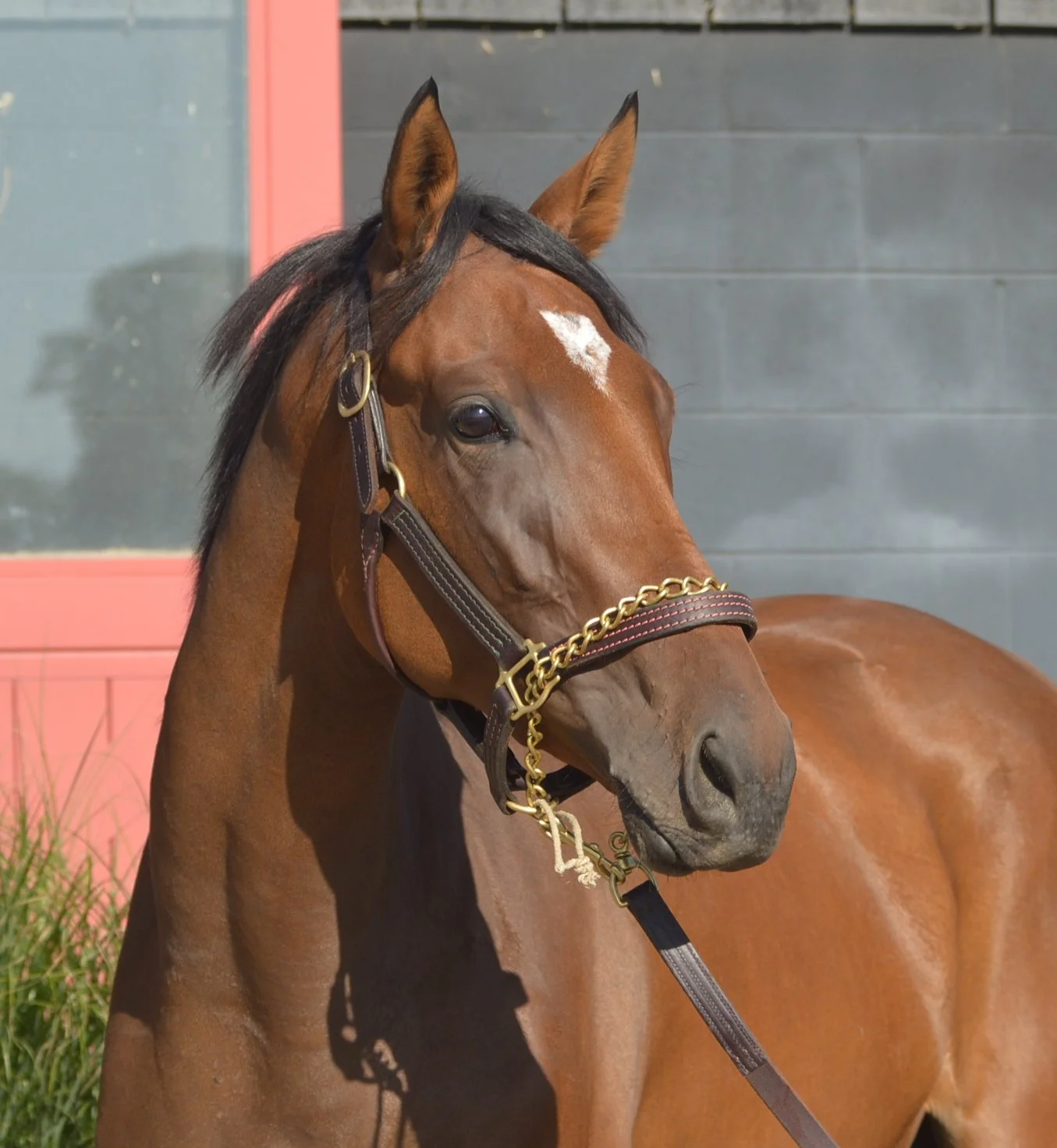





Margaux Freshening & Training Grad, BEELINE, stays perfect and goes 2-for-2 in the Hutcheson Stakes at Gulfstream on March 16th, 2024 with Edgard Zayas aboard. The Riley Mott trainee came out on top after a strong bid from competitor, Improptude, on his outside.
Margaux Breaking & Training Grad, JUST FYI, is awarded the 2YO Fillies Eclipse Champion after an unbeaten 2yo career in 2023 for owner/breeder George Krikorian.
Margaux Breaking & Training Grad, JUST F Y I, prevails in the Breeder’s Cup Juvenile Fillies besting heavy favorite Tamara, and holding off Jody’s Pride at Santa Anita November 3rd.
Margaux Starting and Training Grad, JUST FYI, doesn’t let the poor weather bother her at Belmont at the Big A to score in the G1 Frizette Stakes on Oct. 7th. This victory giving her 2-2 and a berth into the G1 Breeder’s Cup Juvenile Fillies at Santa Anita this November.
Margaux Training Grad, Fast as Flight, earns her first stake victory in the Anchorage Overnight Stakes at Ellis Park on July, 2, 2023.
Margaux Starting & Training Grad, HAYES STRIKE, makes it just in time to win the Texas Derby at Lone Star on May 29th, 2023.
Margaux Freshening & Training Grad, WAR LIKE GODDESS, makes history with her third victory in the G3 Bewitch Stakes at Keeneland on April 28th, 2023
Margaux Raised and Trained Grad, DEFINING PURPOSE, puts on a show in the G1 Ashland Stakes at Keeneland on Friday. The filly, born at Margaux Farm, defeated rivals such as Julia Shining, Punchbowl, and Wonderwheel.
Margaux Freshening and Training Grad, DOPPELGANGER, rallies to take the G1 Carter Handicap at Aqueduct on Saturday. This makes his first graded stake victory and third win in a row since leaving Margaux Farm.
Margaux Freshening and Training Grad, ELM DRIVE, captures her third stakes victory of her career off her layup at Margaux Farm. She nudged ahead of her rivals to hit the wire three-quarters of a length ahead at Santa Anita on Saturday in the Monrovia Stakes.
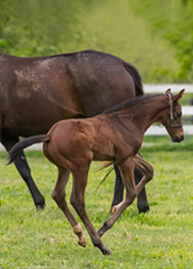
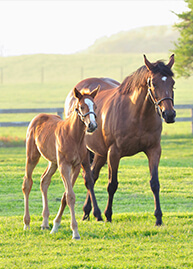
Daddy Is A Legend, owned and raced by Jim and Susan gave birth to her first foal, a colt, the morning of January the 20th.
A filly, bred by Jim and Susan Hill, makes her appearance January 16th by Authentic out of Lead Guitar.
Margaux Raised & Training grad, DEFINING PURPOSE, Ended the year on a high note in the Year’s End Stakes at Oaklawn on December 31st, 2022.
Margaux raised & training grad, FROZEN SOLID, scores first win of the year for owners Jim and Susan Hill at Gulfstream on January 6th, 2023.
Margaux Starting & Training Grad, CAST MEMBER, goes 3-3 in the Soviet Problem Stakes at Los Alamitos on December 11, 2022.
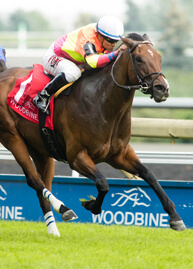
Margaux Starting & Training Grad, STREGA, goes wire-to-wire to win the Ashbridges Bay Stakes at Woodbine on November, 18, 2022.
Margaux Starting & Training Grad, CAST MEMBER, rallies to win the Golden State Juvenile Fillies Stakes at Santa Anita on October 29, 2022.
Margaux Starting & Training Grad, IRONSTONE, captures his first graded stakes victory at Woodbine on October 23, 2022.
Margaux Starting & Training Grad, TEMPLE CITY TERROR, cashes in her first graded stake victory at Keeneland on October 23rd.
Margaux Training Grad, WAR LIKE GODDESS, beats the boys in the G1 Joe Hirsch Turf Classic by 2 3/4 lengths.
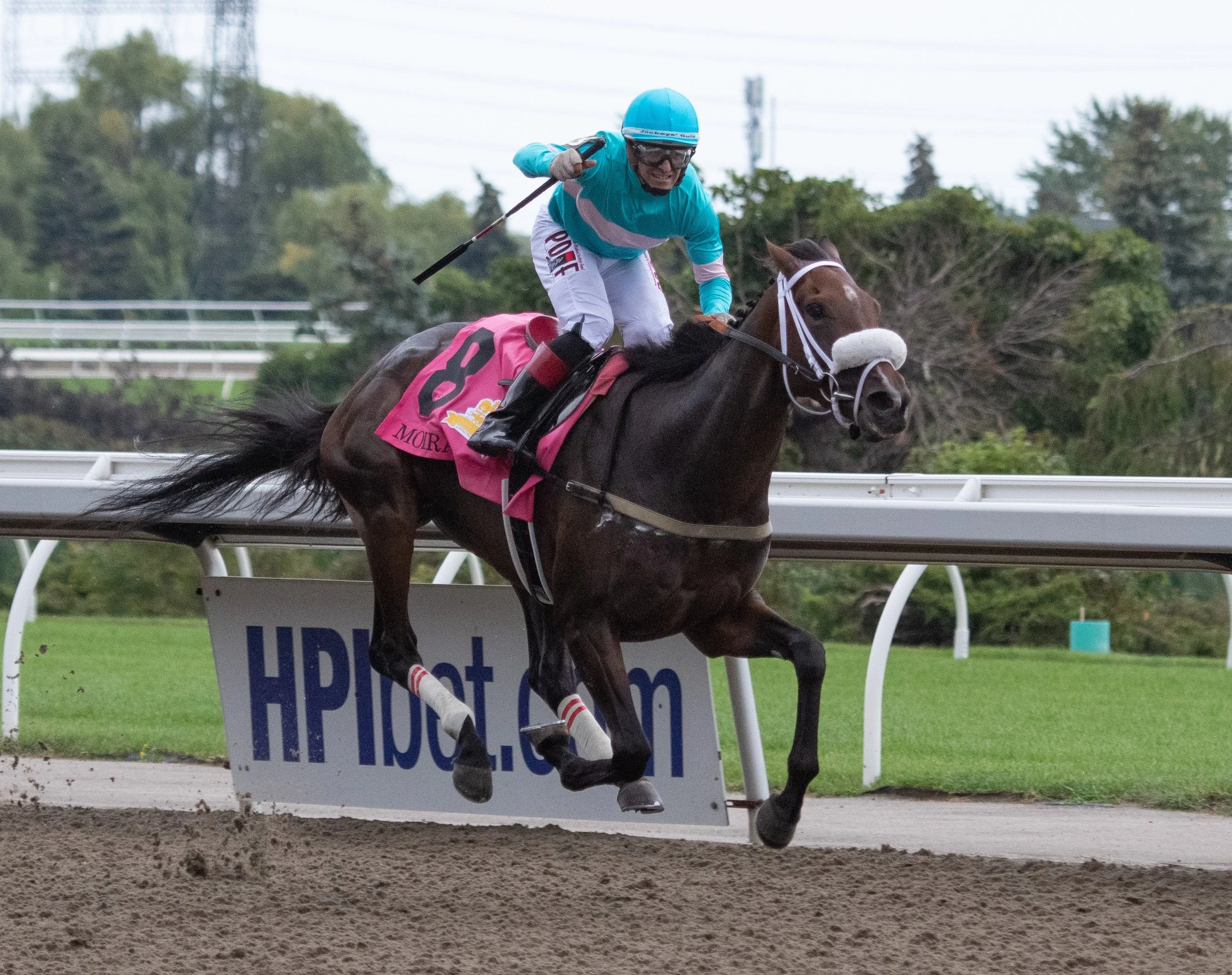
Starting & Training Grad, MOIRA, puts on a show beating the boys at Woodbine on August 21st.
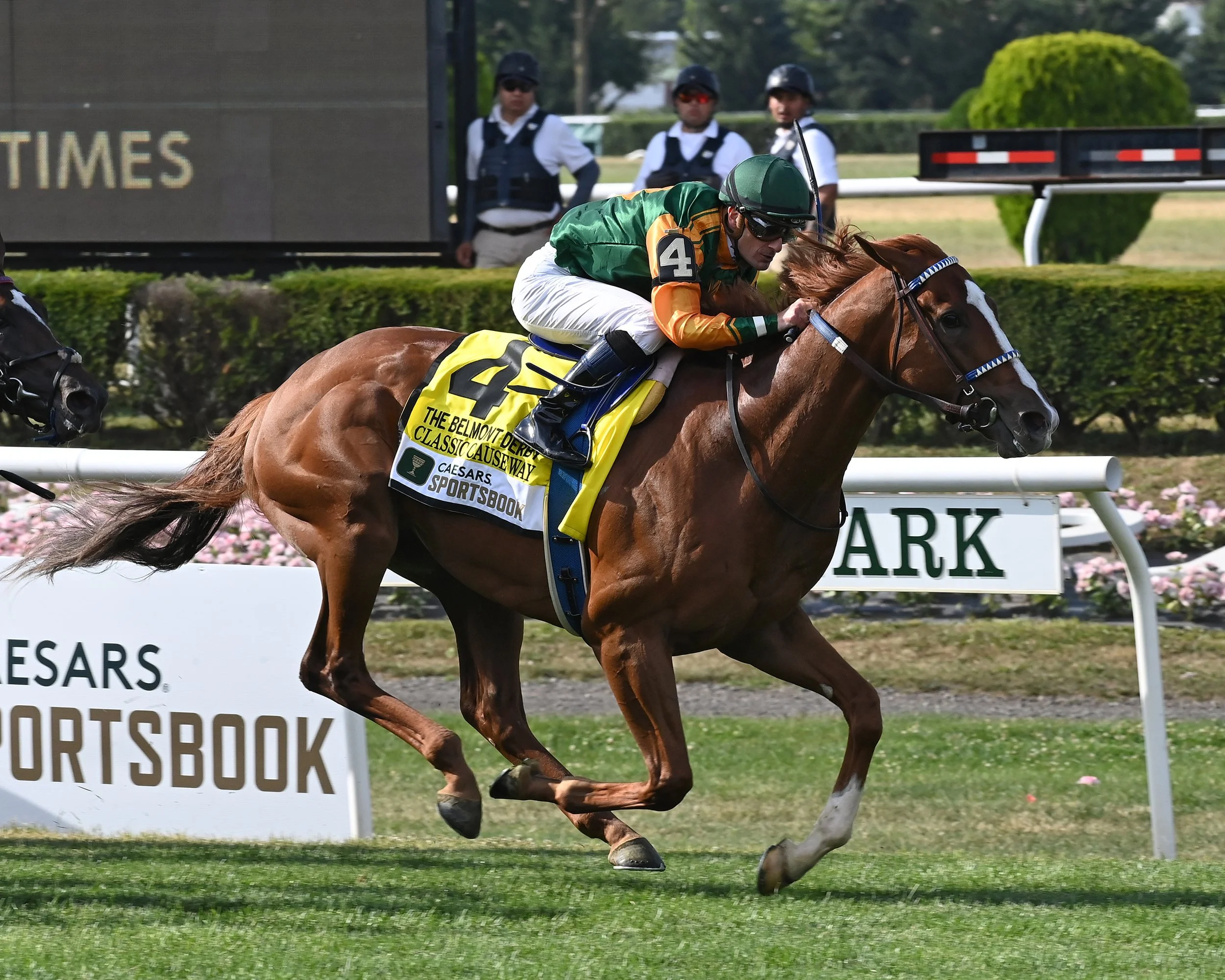
Margaux Starting & Training Grad, CLASSIC CAUSEWAY, shocks in his turf debut. He takes the G1 Caesars Belmont Derby Invitational in a field of 13 on July 9th.
Margaux Starting & Training Grad BIG SWITCH returned to her stakes winning form with a 4 1/4 length win in the Melair Stakes, going 1 1/16 miles on the dirt at Santa Anita on May 28.
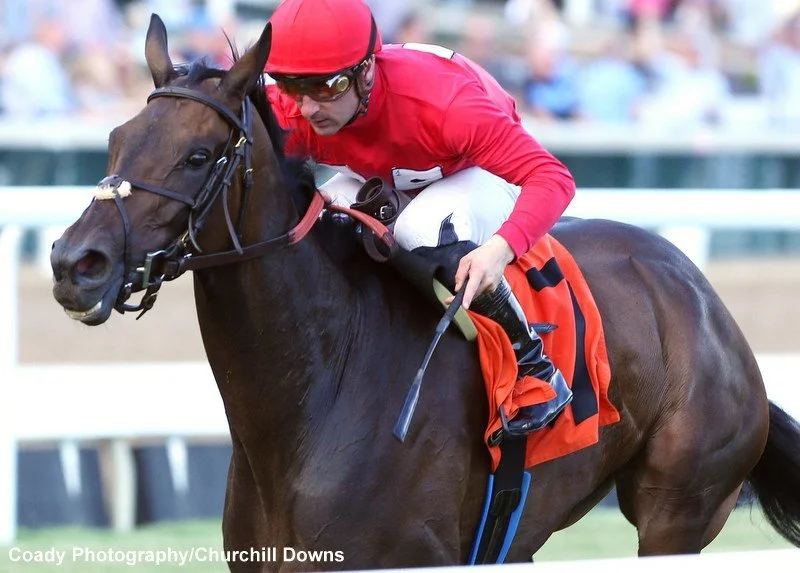
Margaux Freshening & Training Grad TEMPLE CITY TERROR defended her title with a last to first 1/2 length victory in the Keertana Stakes, going 1 1/2 miles on the turf at Churchill Downs on May 28.
Margaux Freshening Grad SCALDING scored a commanding 1 1/4 length victory in the G3 Ben Ali Stakes, going 1 1/8 mile on the dirt at Keeneland on April 23.
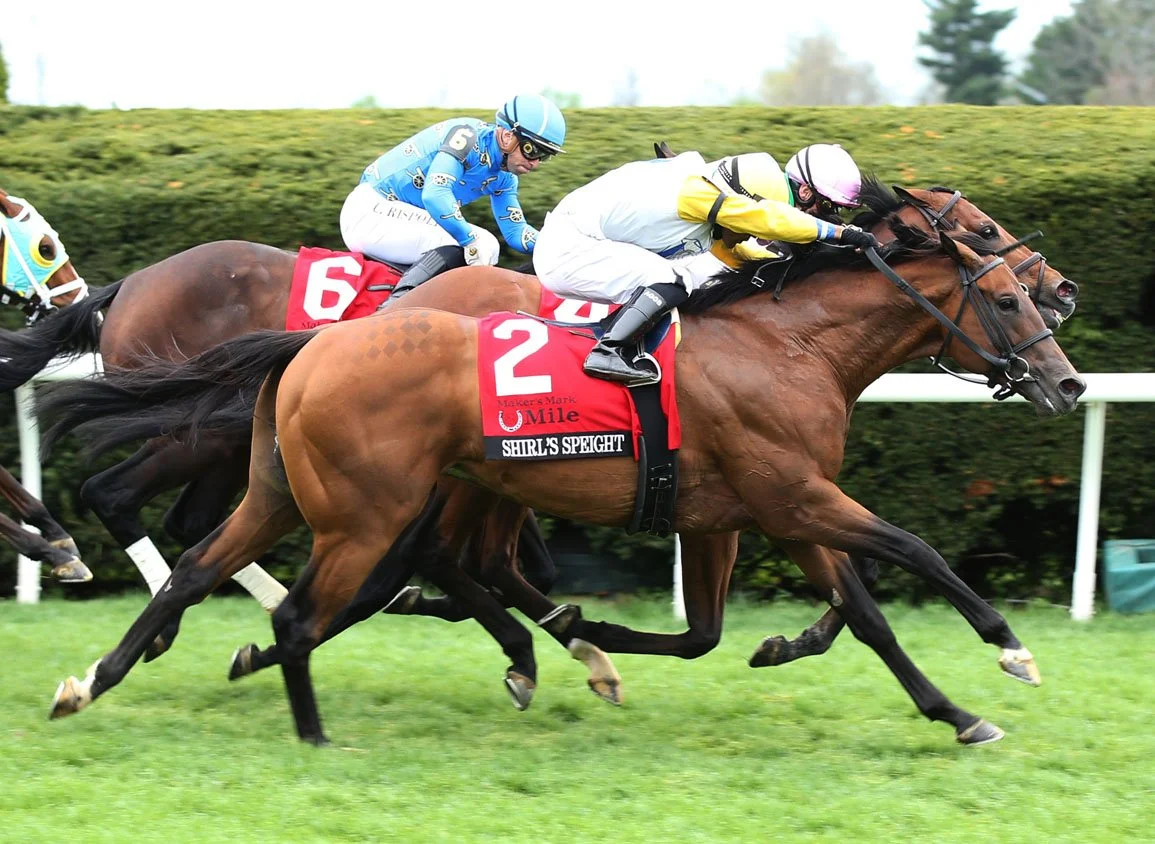
Margaux Training Grad SHIRL’S SPEIGHT scored a thrilling victory as he edged out his rival by a nose in the final strides in the G1 Makers Mark Mile Stakes, going 1 mile on the turf at Keeneland on April 15.
Margaux Freshening & Training Grad SPENDARELLA cruised home to a decisive 1 3/4 length victory in the G2 Appalachian Stakes, going 1 mile on the turf at Keeneland on April 9.
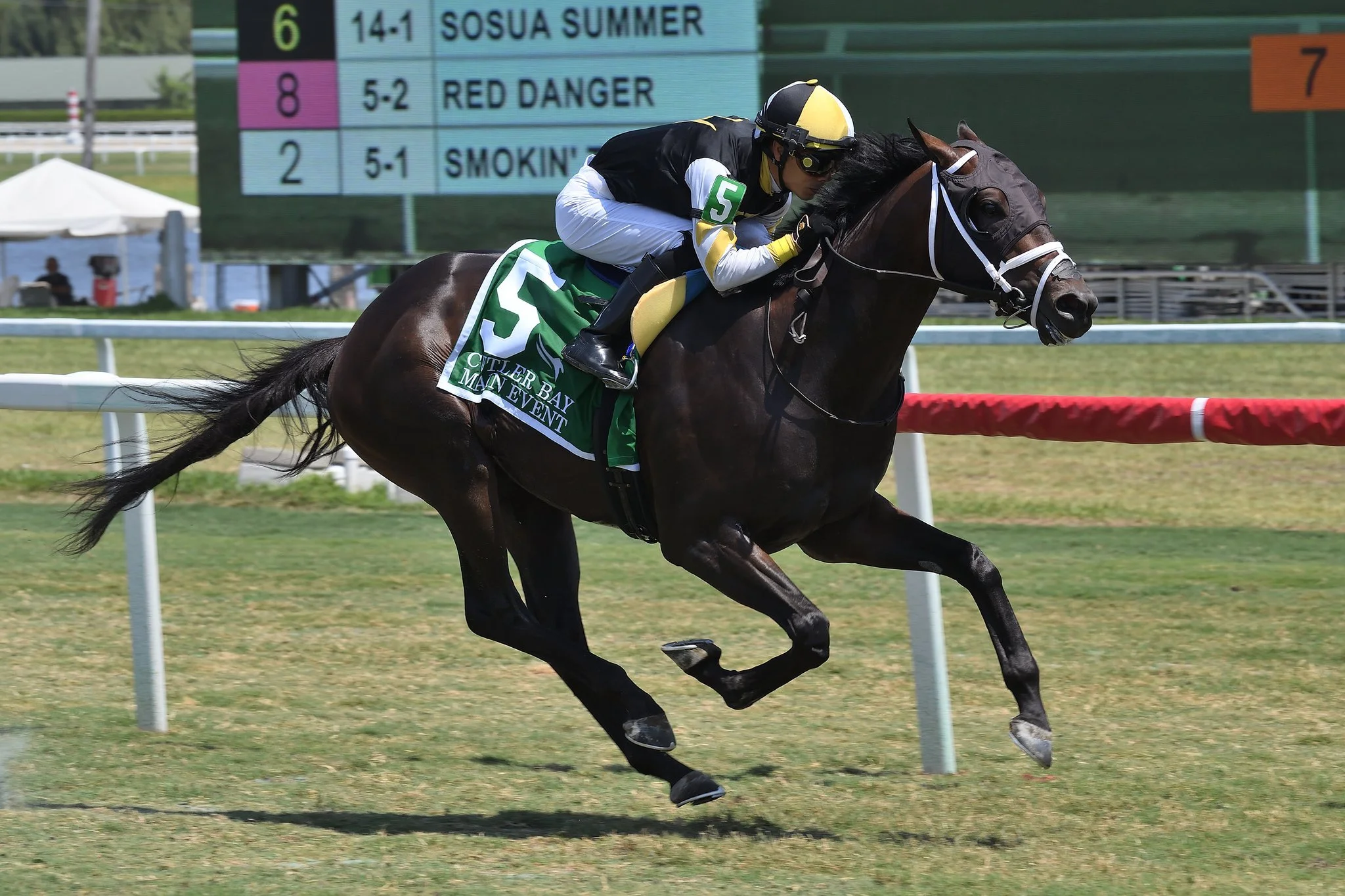
Margaux Freshening & Training Grad MAIN EVENT soared to a strong victory in the Cutler Bay Stakes going 1 1/16 miles on the turf at Gulfstream Park on April 2.